Gardening Services in Neasden

Gardening Services Neasden covers practical garden care for homes and managed outdoor spaces that need regular attention, seasonal tidying or a clear plan for improvement. Our work can include lawn mowing, hedge trimming, planting support, garden maintenance, garden clearance, decking services, landscape gardening and tree lopping and removal, depending on what the site needs and what is appropriate for the space. The aim is straightforward: keep the garden usable, neat and better organised, while matching the work to the condition of the ground, planting and access.
Some customers want a one-off tidy-up before they can enjoy the space again; others prefer recurring maintenance so the garden stays under control through the growing season. We can help with routine tasks such as keeping grass at a manageable length, cutting back overgrowth and removing green waste, as well as more involved changes where the layout or planting needs to be improved. If you are comparing options, our services overview gives a broad view of the main work we provide, while the pages below explain each service in more detail.
For a clearer view of typical pricing and what influences the cost of a job, the pricing and quotes page is a useful starting point. It is often helpful to think first about the size of the area, how much cutting back or clearance is needed, whether access is straightforward and whether the work is a simple refresh or part of a larger change. Start with the result you want, and then request a quotation once you have a sense of the scope.
Garden maintenance and regular care
Regular garden maintenance keeps outdoor areas manageable without waiting for a full overhaul. This can include grass cutting, edging, light pruning, border tidying, weeding and the removal of small amounts of debris that build up over time. The right schedule depends on how quickly the garden grows and how much detail you want preserved. A more frequent visit may suit a tidy front garden or a lawn-heavy space, while a lower-frequency approach can work for larger plots or more natural planting.
Good maintenance is usually about consistent, careful attention rather than dramatic change. If a garden already has structure, we can work within that layout and keep paths, edges and planting areas looking controlled. If the space has become uneven or neglected, maintenance may need to begin with a stronger cut-back before lighter care can take over. Typical decisions include how short to cut lawns, how much of a hedge to remove at once and which areas should be left to support healthy regrowth.
What this type of care can include
Useful maintenance tasks often sit together rather than being handled in isolation. A tidy lawn, clear borders and a safe, accessible route through the garden make the whole space feel easier to use. In many gardens we can combine several smaller tasks in one visit so the work feels joined up rather than piecemeal. Common examples include:
- lawn mowing and edge finishing
- hedge trimming and shaping
- basic pruning and dead growth removal
- weeding and light border tidy-up
- green waste collection where needed
Garden clearance and overgrowth removal

Garden clearance is often the right answer when a space has been left too long and the priority is to regain order quickly. This kind of work can involve cutting back dense growth, removing loose waste, dealing with broken or unwanted garden items and making the area accessible again. Clearance is not the same as long-term maintenance: it usually starts with recovering space and visibility before any finer shaping or ongoing care is considered. The exact approach depends on how much material is present and what should remain.
Some clearances are straightforward and mostly involve waste removal and cutting down obvious overgrowth. Others need more careful handling if the space includes plants worth keeping, awkward corners, stacked material or buried debris. The work may need to be staged so the garden is opened up first and then assessed properly. If you are unsure how much needs removing, a simple description of the current state is usually enough to begin planning the job. Use the contact us page if you want to request a quotation for a clearance or to ask whether a mixed job can be arranged.
Because clearance jobs vary so much, it helps to think about three practical questions before you enquire: what must definitely be removed, what should be retained, and whether you want the space left ready for further garden work. That distinction matters because some gardens only need cutting back, while others need items taken away and the site reset. If your aim is to make the area easier to use again, clearance can be the first step before lawn care, planting or landscaping begins.
Lawn mowing and grass care
Lawn mowing may sound simple, but a good finish depends on more than just cutting the grass. The condition of the turf, the thickness of growth, the presence of weeds and the shape of the lawn all affect how the work should be carried out. A regular mowing pattern can help the lawn look neater and remain easier to maintain, while a neglected lawn may need a more careful first cut and perhaps additional tidy-up around edges and borders. The aim is to achieve a clean, even result without stressing the grass unnecessarily.
Where the lawn is part of a larger garden, mowing often works best alongside other tasks such as edging, trimming around obstacles and clearing loose cuttings. This gives the whole space a more finished appearance and prevents neat mowing from being undermined by rough boundaries. If a lawn has uneven access or awkward corners, it can take longer to complete properly, so it is sensible to describe any features that may affect the work. Lawn mowing information is available for customers who want a dedicated look at that service.
Grass care also involves choosing a sensible cutting level for the season and the site. Cutting too short can leave a lawn looking patchy, while leaving it too long can make the area feel untidy and harder to manage later. The right balance depends on the condition of the grass and the finish you want. For many gardens, the most useful result is not an extreme transformation but a clean, even, practical surface that sits well with the rest of the space.
Hedge trimming and boundary shaping
Hedge trimming is about control, definition and healthy growth rather than simply shortening whatever is overhanging. A hedge that is trimmed carefully can improve light, sharpen the boundary of the garden and stop paths or drive edges from feeling crowded. Depending on the plant and the season, the work might involve light shaping, more noticeable reduction or tidying after a period of strong growth. Attention to the top and sides matters because uneven cutting can leave the hedge looking tired even if it has been shortened.
There is also a practical side to hedge work. Overgrown hedging can affect how easily people move through a garden, hide useful features and make the outside space feel smaller. When trimming is part of a wider maintenance plan, it can be coordinated with lawn care and clearance so the whole area is brought back under control in one sequence. If you need a separate explanation of this service, see the hedge trimming page for a more focused description of the work.
Some hedges respond well to regular shaping, while others need a more cautious approach because of growth habit, nesting periods or the risk of exposing bare patches. The better the initial assessment, the more likely it is that the finish will be tidy and balanced. In many cases, the result you want is a boundary that looks intentional rather than simply cut back. That means working with the hedge’s form, not against it.
Landscaping and garden improvements
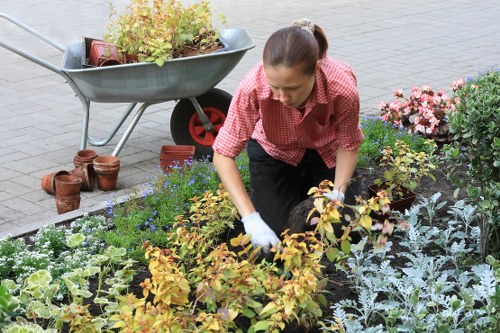
Landscaping gives a garden a more purposeful structure when the current layout no longer works well. That may involve reshaping parts of the site, improving planting areas, creating clearer edges or introducing new surfaces and features that suit the way the space is used. Landscaping can be practical, visual or both. Some projects focus on making a garden easier to care for, while others aim to improve the flow between lawn, borders, paths and seating areas. The best approach depends on the site and the result you want from it.
Because landscaping covers a wider range of tasks, it benefits from careful planning. We can work on projects that begin with a simple change of layout and extend to more involved improvements that connect several parts of the garden. Materials, access and ground conditions all shape how a project should be handled. If you are considering a more substantial change rather than just a tidy-up, the landscape gardening page is a good place to look for a fuller description of that type of work.
Many customers think of landscaping as a way to move from an awkward or patchy garden to one with clearer lines and better day-to-day use. That does not always mean a complete redesign. Sometimes a carefully judged adjustment to levels, borders or planting beds is enough to improve the whole feel of the area. A strong landscaping plan usually balances appearance, maintenance and how the garden will be used over time.
About Neasden
Neasden is an area in northwest London, best known in part for the contrast between its busy road network and quieter residential streets. It sits within the London Borough of Brent and has long been shaped by transport routes linking it to neighbouring parts of the capital. The area is closely associated with the history of the former village that once stood here, while later railway and road development brought the more urban character seen today. Neasden is also widely recognised for Neasden Temple, the Shri Swaminarayan Mandir, which has become one of the area’s most prominent landmarks and a notable example of traditional Hindu temple architecture outside India. The temple complex stands out for its carved stonework and formal layout, making it an important cultural and architectural feature in the local landscape. Nearby, Gladstone Park provides a large green open space with varied terrain, playing fields and long views across the city on clearer days. The wider district includes a mix of housing, small commercial areas and transport infrastructure, with the Jubilee line serving Neasden station and shaping movement through the area. The streets around the station and main roads reflect the layered development of the district, where older local history, twentieth-century expansion and modern regeneration sit alongside one another. As a result, Neasden has a practical, lived-in character rather than a single uniform centre, with landmarks, parks and transport links each contributing to how the area is understood. It is a place where everyday routes, community institutions and open spaces form the backdrop to a varied urban neighbourhood.
Tree lopping, removal and higher growth
Tree work needs a cautious, measured approach because branches, height and canopy spread all affect how the job should be handled. Tree lopping and removal can be appropriate when growth is becoming unsafe, unhealthy or too dominant for the available space. In some situations the work is about reducing pressure from overextended branches; in others, removal may be the cleaner option if the tree is no longer suitable for the location. The right decision depends on size, condition, access and what needs to happen after the tree work is complete.
Where trees sit close to fences, buildings, paths or other planting, careful planning matters even more. Branches may need to be brought down in stages, and waste may need to be managed efficiently so the site is left safe and tidy. If you are considering this kind of work, the tree lopping and removal page explains the service in more detail. It is sensible to think in terms of the finished outcome: safer clearance, improved light, better access or more room for the rest of the garden to function properly.
When tree work becomes part of a wider job
Tree work often sits alongside other garden tasks. A trimmed canopy may reveal areas that also need mowing, pruning or clearance, while removal can open up space for new planting or landscaping. Where the work is part of a larger garden improvement, it can be planned so the sequence makes practical sense rather than creating repeated disruption. This is especially useful when branches, waste and access all need to be considered together.
Decking, planting and finishing touches

Decking services can help turn a usable garden into one with a clearer place to sit, step out or move between levels. Decking is often chosen when a garden needs a defined surface that feels more stable or more connected to the house and other features. Depending on the site, decking can support a seating area, a transition from indoors to outdoors or a cleaner route across ground that is uneven or hard to use. It works best when it is planned in relation to the rest of the garden rather than added as an isolated feature.
Planting and finishing details also matter once the larger structure is in place. Borders, edges and the balance between hard and soft surfaces can change how complete the garden feels. If you want to explore this type of project further, the decking services page is useful for more focused reading. Small finishing decisions can have a strong effect, whether the aim is a more contemporary look, a simpler layout or a garden that is easier to care for during the year.
Where landscaping and maintenance overlap, it is often worth considering what should be built in and what should remain flexible. A good garden does not have to be elaborate; it just needs to work well for the space, the ground conditions and the way it will be used. That might mean keeping planting areas clear, defining access routes or giving a section of the garden a practical surface that sits neatly alongside the rest of the work.
Preparing your enquiry and quotation
When you request a quotation, the most helpful details are usually the type of work, the size of the garden and any conditions that may affect access or timing. If you already know whether the job is one-off, seasonal or ongoing, include that as well. Photographs can be useful when the space is difficult to describe, but a written summary is just as valuable. The more clearly the scope is set out, the easier it is to suggest a suitable approach and avoid confusion later.
If the work involves several tasks, group them together before you enquire so the quotation reflects the full job rather than just one part of it. For example, a clearance job may also need hedge trimming or waste removal, and a landscaping enquiry may include preparatory cutting back before the main work starts. Clear priorities save time, especially when a garden needs both tidying and improvement. You can also use the garden clearance page if the main concern is overgrowth, debris or reclaiming the space.
To move forward, tell us what needs attention, what should be kept and whether there are any access points or boundaries we should know about. Then request a quotation using the contact details on the site, or follow the route that suits your enquiry best. If you would like to see how the service is presented more broadly before you decide, the about us page and the garden maintenance page can provide extra context; contact us to ask for a quotation.
Garden maintenance choices and service planning

Choosing the right mix of garden services often comes down to timing and priority. A garden that is just beginning to look untidy may only need trimming and mowing, while a neglected space may need clearance first, then maintenance, then possibly landscaping or decking work. Thinking in stages can make the job easier to manage and help you decide what should happen now and what can wait. It also allows the work to be matched more closely to the real condition of the garden rather than to a generic package.
Where several tasks are needed, it is usually better to plan them in a sensible order. Removing bulky waste before fine trimming, for example, can make the garden easier to inspect and finish properly. Likewise, if a site is being improved for regular use, shaping the main structure before focusing on the details can save time and reduce repeated handling. The recycling and sustainability page may also be helpful if you want to understand how garden waste and materials are handled in a more responsible way.
Whatever the size of the task, the most useful quotation is the one that reflects the actual scope of work and the outcome you want. If you want a garden that feels cleaner, easier to care for and more balanced in layout, our range of gardening services can be tailored to that aim. Tell us what needs doing, and then ask for a quotation when you are ready to take the next step.